project showcase
What does the ball hear?
Bringing the game's energy to life for visually impaired fans using 5G and Spatial Audio
View Prototype →
Overwiew
Time Line
Oct 2021, 48 hours
Disciplines
Product Design,
UX Design,
Accessibility
My Role
UX Research
UI Design,
Business Model,
User Testing
Team Size
5
At&T Hackathon
In October 2021, AT&T hosted a 5G in Sports Hackathon at Butler University in Indianapolis, where participants were challenged to create innovative solutions for enhancing various aspects of sports through technologies like 5G. The teams focused on solving problems across three key areas: Fan Engagement, IoT, and Venue Safety.
Our direction
As a team, we refined the problem statement to focus on enhancing fan engagement through 5G technology, with additional emphasis on addressing the needs of visually impaired fans.
Problem Statement
How might we Improve the overall Fan Engagement for the game of BASKETBALL using 5G technology and extend the engagement to the visually impaired?
Key Features



Process
01 -
EXPENSIVE COURT SIDE TICKETS

02 - ENGAGEMENT OF VISUALLY IMPAIRED FANS
01 -
SMART BASKETBALL
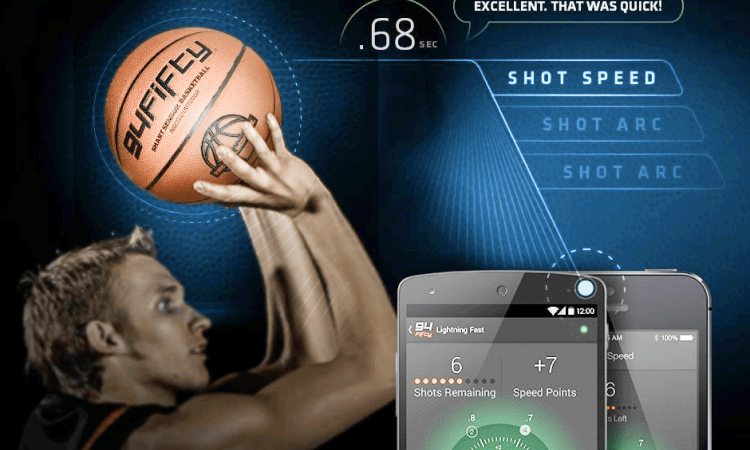
The basketball is charged through wireless charging.
02 -
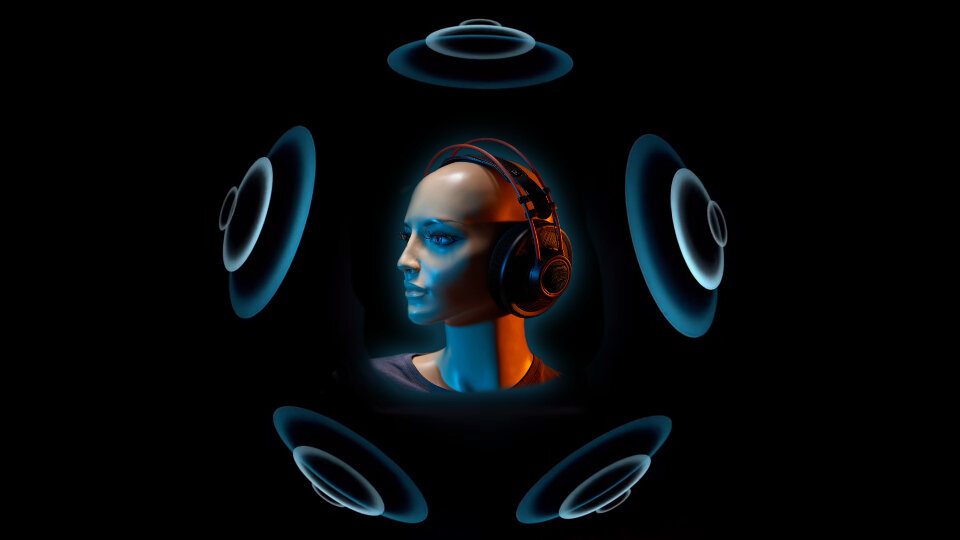
SPATIAL AUDIO
03 -
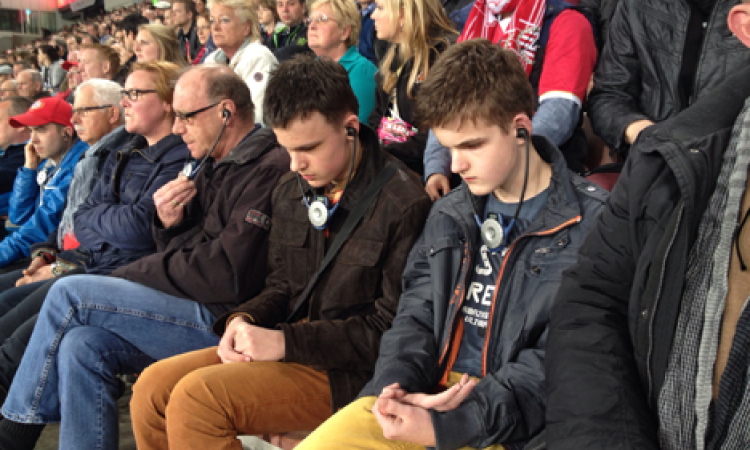
ENGAGING VISUALLY IMPAIRED AT THE VENUE
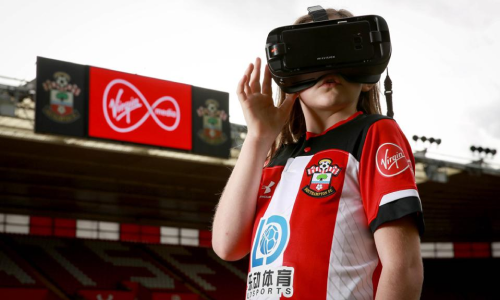
Foot braille uses haptic technology and tactile graphics to extend fan engagement for football.
04 -
MACHINE LEARNING AND IOT

01 -
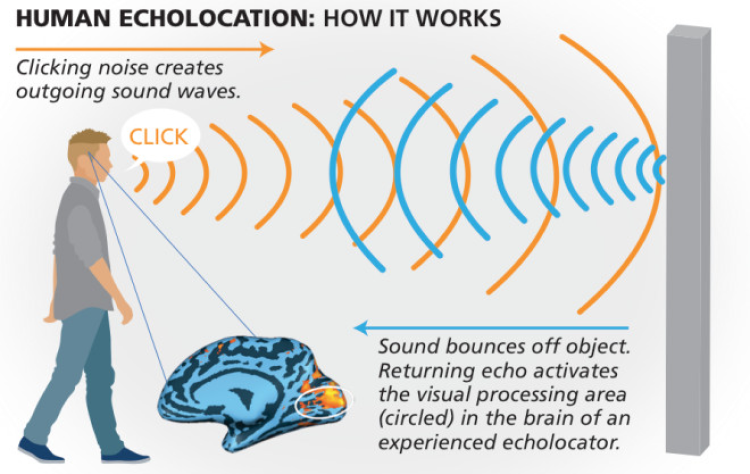
Experiencing the game through sound
02 -
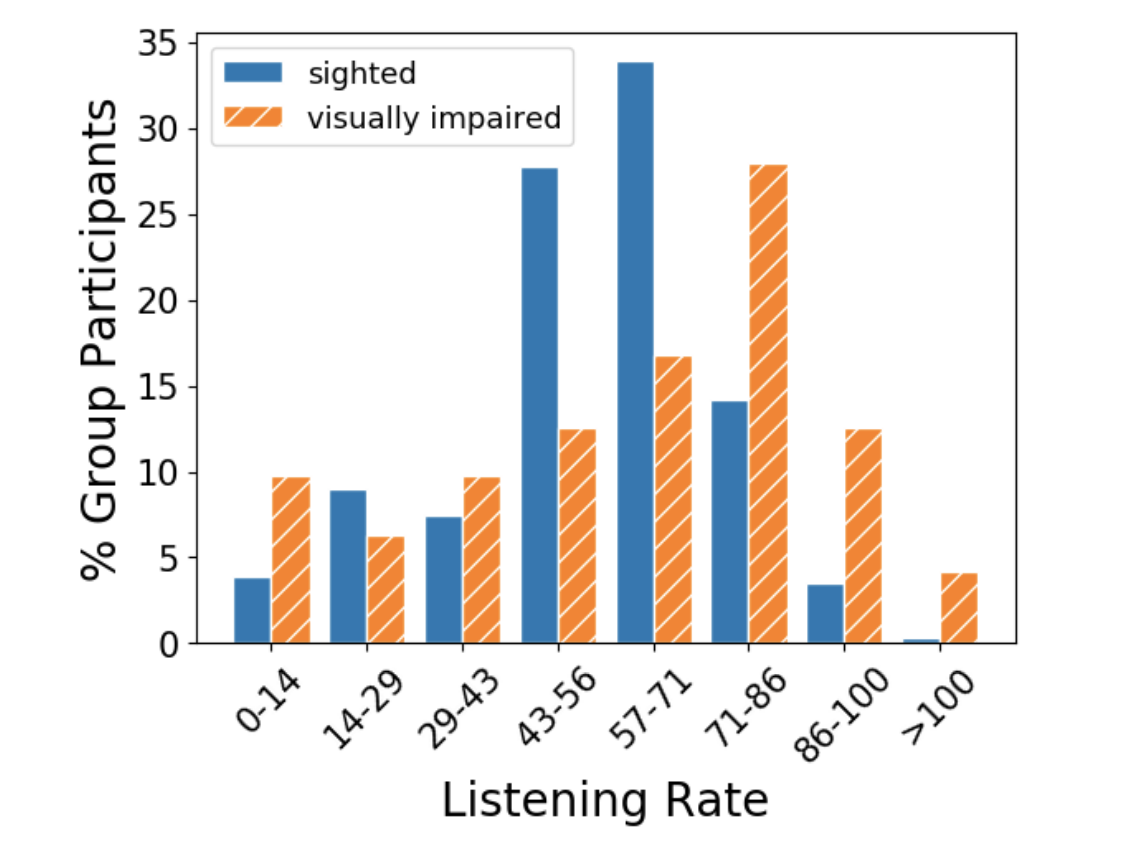
HIGH rate of Hearing
02 -
Games for the BLIND

Beep Baseball - The ball and the bases emit a beeping sound acting as beacons to help the visually impaired play.
1. The Visually impaired
2. Sighted Fans
We then created the personas for the two identified sets of users which formed the basis of our ideation process.
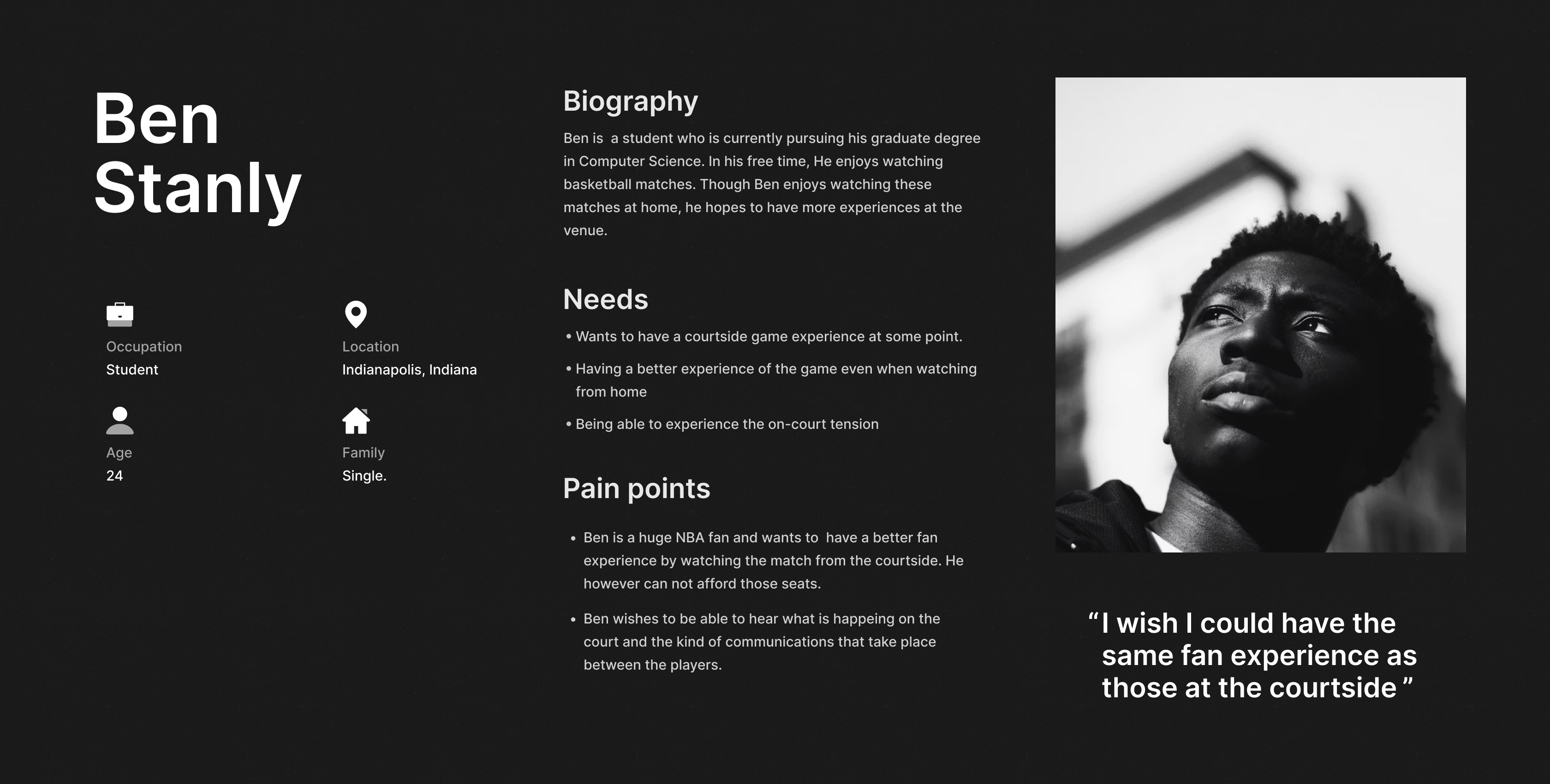
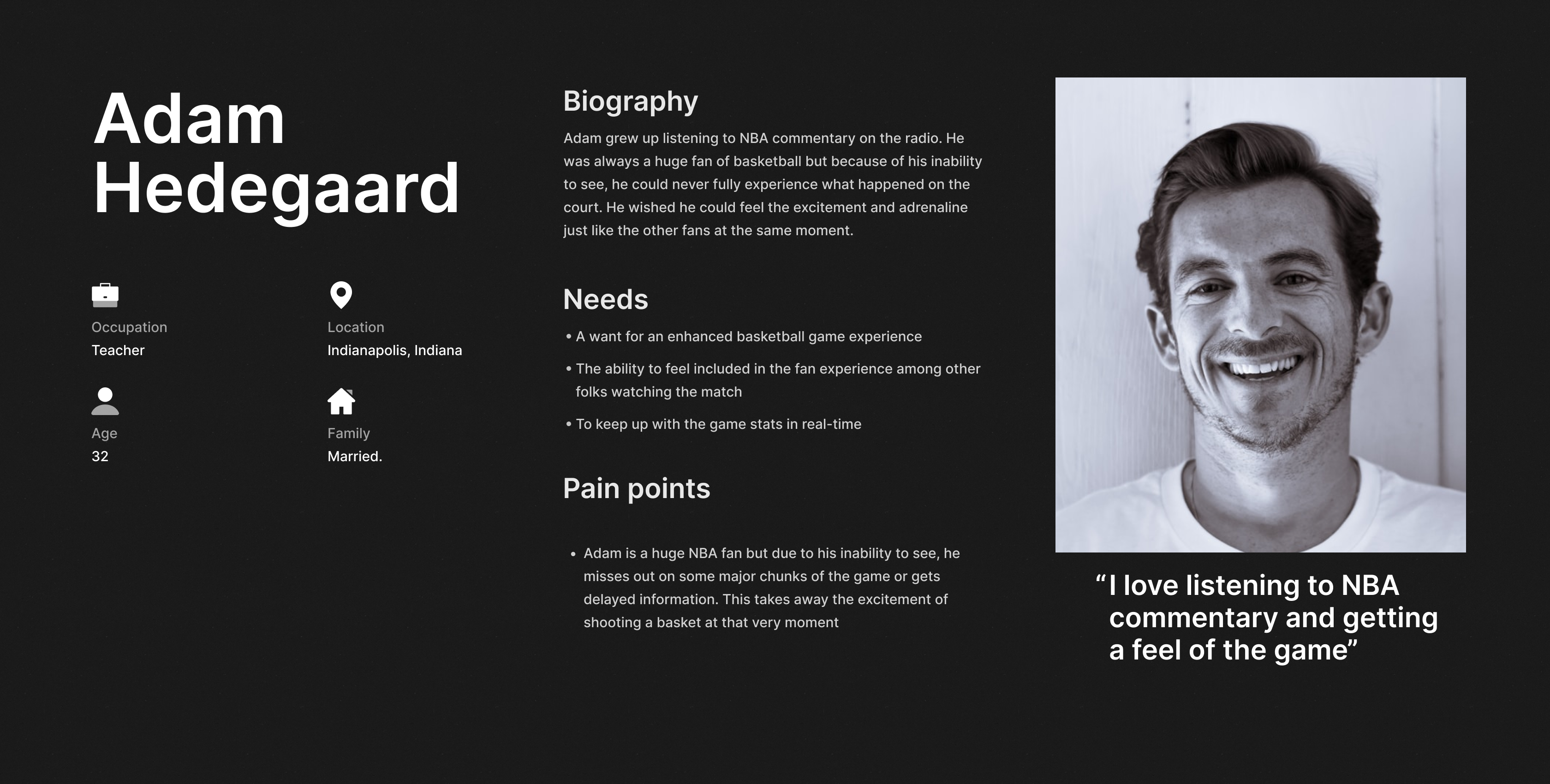
From an accessibility standpoint, We looked into two distinct ways to help better experience the game.
1. Using Tactile Graphics and Refreshable Braille
2. Spatial Audio
We got both the ideas validated by domain experts which helped in narrowing down to the final solution.
.gif)
REFRESHABLE BRAILLE
Cost of Tactile Graphics
"Tactile graphics are very expensive and not very accessible"
- Expert user 1
Noise Reduction
"Spatial audio will definitely help improve fan experience as long as unwanted noise is filtered properly"
- Expert user 3
Complexity of Tactile Graphics
"Tactile graphics may not add to the experience. You will need to create codes to differentiate teams/ball and that would involve a learning curve for the visually impaired"
- Expert user 2
Innovative Solution
"Combining existing technology to improve fan engagement is very innovative"
- Expert user 4
Insights:
• A solid understanding of the game was essential for accurately interpreting what was happening on the court.
• Participants could identify the ball's location on the court and track passes between players.
• Audience and player noise were found to be misleading, making it difficult to draw accurate conclusions about game events.
•Periods of game suspension were confusing, as there were no distinct audio cues to signal these breaks.
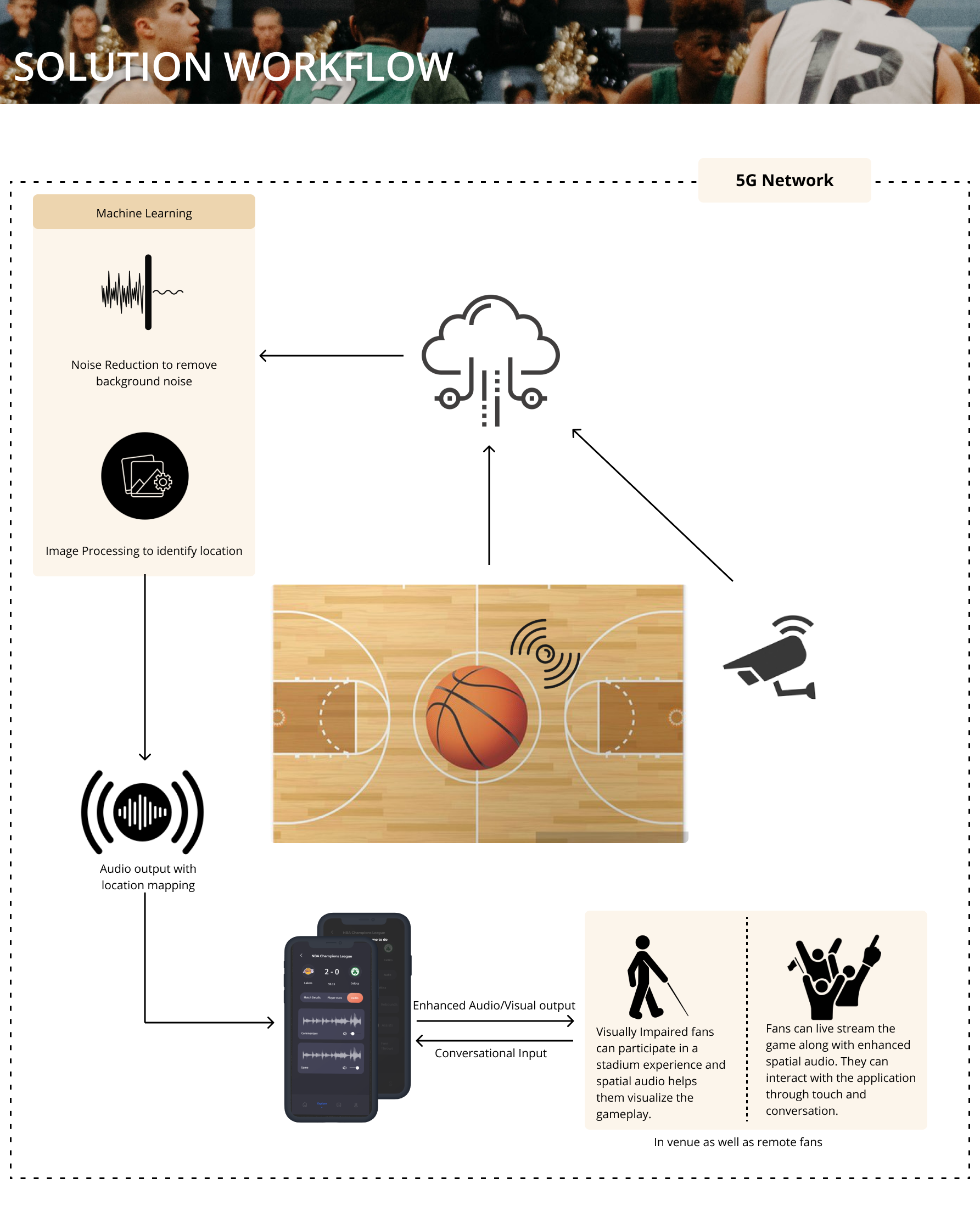
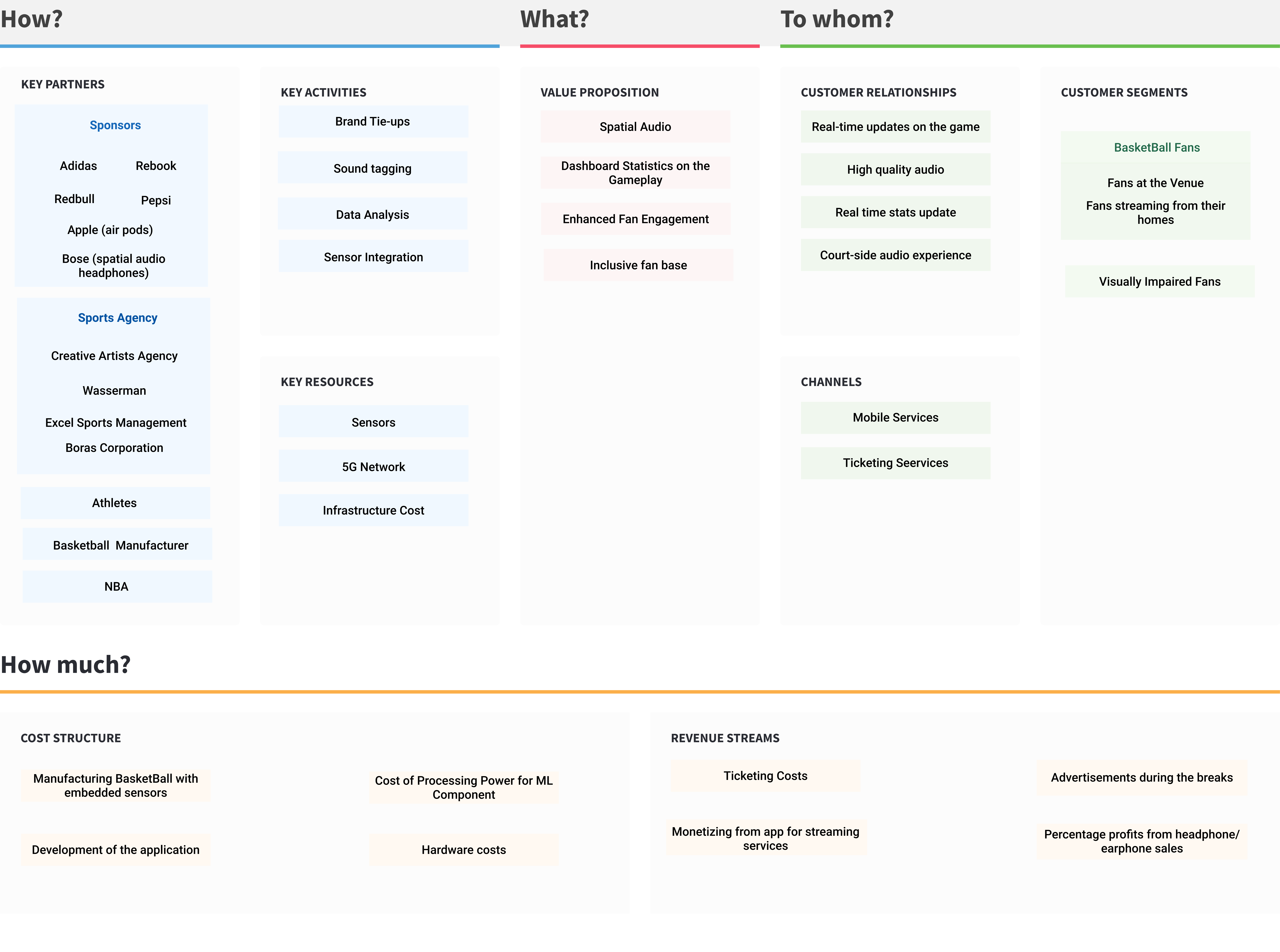
We then explored ways to enhance the audio experience, considering options such as strategically placed microphones around the court, embedding sensors in shoes or flooring, or hanging them from the ceiling. Ultimately, we decided to integrate a sensor inside the basketball for optimal results.






.jpeg)
.jpeg)